


 Posts
Posts


Book Review: The Whole Shebang
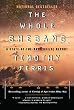 The Whole Shebang: A State-of-the-Universe(s) Report, by Timothy Ferris
Cosmology--the study of the origin and structure of the universe--is a topic that can seem forbidding. Full of counter-intuitive concepts best understood with mathematics, and covering time and distances unimaginably removed from our planet, it is easily brushed off as irrelevant speculation. To make matters worse, popular culture and science fiction often use scientific-sounding terms like "big bang," "quantum mechanics," "relativity" or "dark matter" in a way that confuses rather than enlightens the average person. The Whole Shebang cuts through a lot of the garbage and explains what the big bang is all about.
Continue Reading
Timothy Ferris tells the story of how the current cosmological model came to be. His general approach is to explain the observations that led to current thinking as well as to touch on alternative ideas and the basis for them. Along the way we get glimpses into how science works and the personalities behind the discoveries. He writes that "the line dividing fact from fancy is not always as clear as in other fields." (p. 12) Yet in spite of being introduced to contradicting views or data, I still felt that I had a sense for where the more solid footing lay. His even-handed approach extends to more philosophical areas as well. For example the final chapter, which discusses the meaning of cosmology for God (his answer: cosmology tells us nothing about God) and some of the arguments for and against him, contains this statement: "...when the cosmological arguments propounded by atheists are subjected to reasoned criticism, they fare no better than the comparable arguments of believers." (p.310)
The reading is not all easy going; a few of the chapters in the middle felt like I was reading the scientific equivalent of Isaiah. However I thought that most of the book was interesting and understandable.
While reading this book I began to realize how much knowledge I take for granted everyday. It was only in the mid-1920's that Edwin Hubble determined that galaxies composed of individual stars existed outside the Milky Way. Now we receive stunning images of deep space from the telescope named after him, we have put men on the moon, and we've sent probes to study close-up what to us are specks in the sky. All of this, and we have not even scratched the surface of exploration.
You can read a article-length summary of the book here. Also, one whole chapter is available here.
Finally, here are a few passages that I enjoyed.The empirical spirit on which the Western democratic societies were founded is currently under attack, and not just by such traditional adversaries as religious fundamentalists and devotees of the occult. Serious scholars claim that there is no such thing as progress and assert that science is but a collection of opinions, as socially conditioned as the weathervane world of Paris couture. Far too many students accept the easy belief that they need not bother learning much science, since a revolution will soon disprove all that is currently accepted anyway. In such a climate it may be worth affirming that science really is progressive and cumulative, and that well-established theories, though they may turn out to be subsets of larger and farther-reaching ones--as happened when Newtonian mechanics was incorporated by Einstein into general relativity--are seldom proved wrong. As the physicist Steven Weinberg writes, "One can imagine a category of experiments that refute well-accepted theories, theories that have become part of the standard consensus of physics. Under this category I can find no examples whatever in the past one hundred years." Science is not perfect, but neither is it just one more sounding board for human folly. (p.13)
One product of the interaction between cosmology and daily life is the Declaration of Independence. Impressed by the elegant, clockwork precision of planetary motions revealed in Netwon's laws, Western thinkers of a liberal bent dismissed God from his old role of personal intervention--since his services were no longer required to move the planets around--while retaining the concept of God as Creator of the universe. Having done so, they increasingly turned their attention to the study of nature as a way of appreciating God's marvelous design. From this concentration on natural law it was a short step to John Locke's assertion that there are also natural laws that address human beings and their governance. The thrust of these laws is, as Locke put it, that "the natural liberty of man is to be free from any superior power on earth, and not to be under the will or legislative authority of man, but to have only the law of Nature for his rule." By the late eighteenth century Locke's ideas were so much in the air as to be echoed by Thomas Jefferson in the first sentence of the Declaration of Independence: When Jefferson wrote of "the separate and equal station to which the Laws of Nature and of Nature's God entitle" a people, he meant that human equalitiy and the right to life, liberty, and the pursuit of happiness are natural laws, based in nature as are Newton's law of gravity.
(p. 19-20)Trouble brews...whenever scientists confuse constraining a phenomenon with explaining it. If they think they have explained it by showing it to be necessary to life, they may be discouraged from seeking a deeper and more productive explanation. This has already happened. The phenomenon in question was the isotropy of the universe--the fact that it looks the same in all directions....In 1973, Stephen Hawking and Barry Collins...invoked the anthropic principle to "explain" cosmic isotropy by noting that if the universe were not highly isotropic it would have been difficult for stars and planets to form and, therefore, for life to exist. Fortunately, this argument was not accepted as final, and soon thereafter, isotropy was accounted for in a much more natural and elegant fashion, as resulting from inflation. So we need to be careful that anthropic constraints don't blind us to deeper explanations. If, for instance, the value of the gravitational constant is not an accident but the inevitable consequence of a deep natural structure to be revealed by superstring or some other theory, the anthropic principle will at best have been a red herring when it comes to understanding gravity. (p. 300)
Quoting cosmologist James Hartle:History becomes predictive and testable when we predict that further present records will be consistent with those already found. Texts yet to be discovered are predicted to be consistent with the story of Caesar....In such ways history becomes a predictive science. (p. 256-257)


2 comments:
Thanks for the tip. My Dad just loves this kind of thing. Now I know what to get him for the next gifting occasion.
Reach Upward,
You may also want to consider Coming of Age in the Milky Way, by the same author. I have not read it yet, but I've heard good things about it.
Post a Comment