Tuesday, April 14, 2009

FARMS: Of Science, Scripture, and Surprise

The FARMS Review (2008, Volume 20, Issue 2) contains a thoughtful and articulate essay by Duane Boyce titled, "Of Science, Scripture, and Surprise." It is ostensibly a review of Evolution and Mormonism: A Quest for Understanding, by Trent D. Stephens and D. Jeffrey Meldrum. However, discussion of the book is so superficial that I can't help but think that the book is mentioned simply to serve as justification for including the essay in a review publication. In fact, the essay gives much more attention to Stephen Jay Gould's The Structure of Evolutionary Theory.

Most of the essay can be boiled down to this: science is a messy process that is subject to all manner of human foibles.

To one degree or another, these [foibles] are all inevitable realities of intellectual inquiry. They are unavoidable. But recognizing and explicitly acknowledging such tensions and discontents is preferable to ignoring them. By ignoring them we are apt, in our naïveté, to ascribe more certainty than is warranted at any given moment to a particular discipline's range of intellectual conclusions (as happened with psychoanalytic theory, for example) and to risk developing an attitude of dogmatism and defensiveness as a result.

Recognizing such factors, on the other hand, we can be saved from such dogmatism and instead attain something approaching wisdom: a lingering tentativeness and humility about many of the beliefs we hold at any one time. In other words, we can be sure we are mistaken in one way or another even if we cannot be sure exactly where.
This is all well and good, though it can be taken too far. As Timothy Ferris has written,
The empirical spirit on which the Western democratic societies were founded is currently under attack, and not just by such traditional adversaries as religious fundamentalists and devotees of the occult. Serious scholars claim that there is no such thing as progress and assert that science is but a collection of opinions, as socially conditioned as the weathervane world of Paris couture. Far too many students accept the easy belief that they need not bother learning much science, since a revolution will soon disprove all that is currently accepted anyway. In such a climate it may be worth affirming that science really is progressive and cumulative, and that well-established theories, though they may turn out to be subsets of larger and farther-reaching ones--as happened when Newtonian mechanics was incorporated by Einstein into general relativity--are seldom proved wrong. As the physicist Steven Weinberg writes, "One can imagine a category of experiments that refute well-accepted theories, theories that have become part of the standard consensus of physics. Under this category I can find no examples whatever in the past one hundred years." Science is not perfect, but neither is it just one more sounding board for human folly.
I was pleased that toward the end of the essay Boyce balances his critique of scientific certitude with a critique (though brief) of scriptural certitude. His examples are two of my favorites: the degrees of glory described in D&C 76 and the re-definition of eternal punishment in D&C 19. Both revelations fundamentally altered the way previous scripture was understood. In summary,
...we are likely to understand new truths and experience new perspectives that will dramatically inform and revise matters that we think we understand now: subsequent revelations have a way of informing previous ones.
Next, Boyce takes issue with an interpretation advanced by Stephens and Meldrum of 2 Nephi 2:22, the preeminent 'no death before the fall' scripture. Although he tries to be fair, I don't think that Boyce quite does justice to the interpretation of Stephens and Meldrum. But the strengths and weaknesses of alternative interpretations does not concern me here. What I wish to point out is that this wrangling over interpretation concerns a single, short passage concerning a largely figurative story. To paraphrase B.H. Roberts, I think it is a thin thread to hang heavy weights on.

Moving on, toward the end of the essay Boyce expresses two concerns about evolution, and I will consider his questions in turn.

1. What are we to make of Moroni and Jacob, who both speak of the creation as miraculous?

To begin with, we might consider something Brigham Young said about miracles [1]:
The providences of God are all a miracle to the human family until they understand them. There are no miracles, only to those who are ignorant. A miracle is supposed to be a result without a cause, but there is no such thing. There is a cause for every result we see; and if we see a result without understanding the cause we call it a miracle.
It is not clear to me that Jacob and Moroni had special insight into the creation, as Boyce seems to assume. Both passages occur in a context of the prophet extolling the greatness and power of God. Given their scriptural heritage (especially the creation as depicted in Genesis) and the state of their scientific understanding [2], what choice would they have but to see the creation as miraculous? And if you are looking for examples of miracles, what better example could you find than the creation of the earth and life on it? Processes that we might call ordinary (though still wonderous) were apparently unknown to Jacob and Moroni. If our estimation of God is based on the impressiveness of his miracles (rather than his character and attributes), Brigham Young's statement suggests that we eventually may be disappointed.

2. Since the scriptures relate many miracles where God accomplished great feats quickly, why would he use such a long and wasteful method of creation?

In my mind, this is a more difficult question. It plays a role in some people's disbelief in God, and I don't know of an obvious answer to it. Nevertheless, the view that God as been at work for extremely long periods of time has early support in the Church. For example, we have the statement in a letter from W. W. Phelps [3] that,
...eternity, agreeably to the records found in the catacombs of Egypt, has been going on in this system, (not this world) almost two thousand five hundred and fifty five millions [2,555,000,000] of years: and to know at the same time, that deists, geologists and others are trying to prove that matter must have existed hundreds of thousands of years;—it almost tempts the flesh to fly to God, or muster faith like Enoch to be translated and see and know as we are seen and known!
It is unclear exactly what "system" Phelps was referring to, but this passage has been used by commentators such as Elder Bruce R. McConkie as support for God's vast experience, knowledge, and work. And of course there is also the statement in scripture that "all is as one day with God, and time only is measured unto men" (Alma 40:8). Why the quick miracles then? At least one reason might be that God desired results relevant to human timescales rather than his.

I don't know why God would use such a long process of creation. Presumably, God could have created the earth and life on it in six literal days, which would be quite a miracle. We could draw up a list of reasons why one way would glorify God more than the other. However, as I have argued previously, the issue is not what God could do. The issue is what the surviving evidence suggests. Happily, well-represented portions of Mormonism are quite at home with the vast timescale of creation suggested by the evidence.

Ultimately, I fundamentally agree with Boyce: we will continue to be surprised. I would simply ask that we not lose sight of the well-supported surprises that have already come.


Notes:
1. This sentiment has been echoed by other Church leaders, and the link provided is to Teachings of Presidents of the Church: Brigham Young. This is not an attempt to settle the question by an appeal to authority; it is simply to show that Brigham Young's sentiment is still welcome within mainstream Mormonism.

2. As an example, both prophets appear to believe that God speaking was the direct cause of man's creation from dust, which is a straightforward interpretation of Genesis. Other modern scriptures suggest a more indirect relationship between God's words and the desired result. Further, Brigham Young called the idea that Adam was made from dust "baby stories." It may be that on the topic of the creation, Jacob and Moroni wrote 'pre-surprise.'

3. Times and Seasons, vol. 5 (January 1844-January 1, 1845) No. 24.


Continue reading...

Monday, April 06, 2009

What Separates Humans from Monkeys? (Resurrection Edition)

[This post is part of a series, What Separates Humans from the Animals?.]

Many of our genes exist as families. Gene families are groups of genes that have been created through duplications within the genome, and individual members often subsequently take on different functions as a result of mutation or alteration in regulation. Gene families can expand and contract over time, resulting in greater or fewer family members. This story is about a family of genes involved in the immune system called Immunity Related GTPases (IRGs). Most mammals have multiple copies of these genes, but humans have only two: IRGC and IRGM. Our focus here is on IRGM; we have a functional gene but Old and New World Monkeys do not.

Bekpen et al looked at the IRGM gene of a number of primate species and compared it to those of mice and dogs. The first thing to note is that dogs, mice, and prosimians have multiple copies of IRGM (although not all are functional). Now, here's where things get interesting.

(Click to enlarge.)

Figure 5. A model for the evolution of primate IRGM genes is depicted. The mammalian IRGM tandem gene family contracts to a single-copy gene after the divergence of prosimians and anthropoids. The single-copy gene is pseudogenized in the anthropoid ancestor due to an AluSc repeat integration into the second exon, disrupting the ORF of the sole remaining IRGM gene. Multiple stop codons and frameshift mutations accrue in all Old World and New World monkey lineages. Three mutation events restore the IRGM gene in the common ancestor of apes and humans: integration of the ERV9 element to serve as a new promoter, a single-nucleotide mutation that introduces a new ATG codon (green arrow) after the Alu repeat and the loss of a stop codon that is shared with Old World monkey species. The latter event is polymorphic in orangutans rendering both functional and nonfunctional copies in this species. (*) of the five gibbon species analyzed, H. gabriellae shows a heterozygote stop codon. In the human and African great ape, the functional copy becomes fixed. Frameshift mutation (Fs) and stop codons are indicated. The genomic loci are not drawn to scale with the exception of the full-length sequence of IRGM ORF.

Step 1 - Death: Around 40 million years ago, the ancestor of anthropoids (i.e. monkeys and apes) lost IRGM when there was a contraction down to one copy, followed by the insertion of an Alu element that disrupted the single remaining gene and turned it into a non-functional pseudogene.

Step 2 - Decay: With the single copy of IRGM now broken, mutations in it could begin to accumulate without resulting in a selective disadvantage, and the relative order of the mutations can be determined by looking at which lineages share them. All Old World Monkeys share a mutation that created a premature stop codon in the gene. Remember, a stop codon indicates the end of a gene and the creation of one in the middle of a gene leads to a truncated protein that may be non-functional. However, in this case the stop codon had no real effect because the beginning of the gene was already broken by the Alu element.

Step 3 - Resurrection begins: At least 8% of our genome consists of endogenous retroviruses (ERVs). Retroviruses are a family of viruses that integrate into DNA as part of their life-cycle. If they find their way to a germ-line cell, they can remain in the genome permanently and be passed on as though they were just another gene. Lucky for IRGM, about 20 million years ago an ERV inserted upstream of the Alu element. The reason this was lucky is because the ERV contains a sequence that acts as a promoter, which is a stretch of DNA that promotes the transcription of a gene. In other words, the ERV helped turn IRGM back on. The ERV insertion was accompanied by an independent mutation just after the Alu element that created a new start codon--a new beginning of the gene.

Step 4 - Resurrection complete: Alright, the gene has been turned back on and has a new start codon, but what about that premature stop codon? A simple mutation turned it from a stop codon back to a codon for an amino acid. The gene was thus restored, though shorter than the original. Interestingly, the version of the gene with the stop codon (still broken) and the version without it (functional) can both be found in a species of gibbon and among orangutans. Gorillas, chimpanzees, and humans appear to have completely lost the broken version; they only have the resurrected IRGM. Analysis of the sequence of the resurrected gene suggests that it has been under positive selection (i.e. natural selection favors it).

So the next time you hear someone claim that mutations only destroy genetic information, remember the mutational resurrection of IRGM.


Reference:

Bekpen C, Marques-Bonet T, Alkan C, Antonacci F, Leogrande MB, et al. (2009) Death and Resurrection of the Human IRGM Gene. PLoS Genet 5(3).


Continue reading...

Sunday, March 29, 2009

The Condescension of God

Another visit to the ASA turns up another thought-provoking quote by Paul Seely.

God is a Father, not a rationalistic scholastic philosopher-theologian. He was willing to come down to the intellectual level of his children in order to communicate to them lessons of faith and morals. His employment of ancient history and science as if it were really true is a gracious accommodation to the Israelites’ limited knowledge.

It is a distortion of his grace to call this accommodation a disguising of fiction as real history. The people of that time believed it was real history. God accommodated it as such for their sakes, and we read it over their shoulders.

For a similar previous post, see here.

Source: Genesis 1–11 in the Light of Its Second Millennial Worldview (pdf).


Continue reading...

Wednesday, March 25, 2009

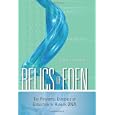
Relics of Eden

If you like my series, What Separates Humans from the Animals?, then you will like reading Relics of Eden: The Powerful Evidence of Evolution in Human DNA by Daniel J. Fairbanks. Fairbanks is a geneticist and was a professor in the department of plant and wildlife sciences at BYU for 20 years, where he also served as dean of undergraduate education, and is now at UVU.

Relics of Eden fills an explanatory gap that has existed for too long. Fairbanks explains his approach:

With the ongoing controversy over intelligent design, people often ask me to recommend a book on the molecular evidence of human evolution. Unfortunately, most popular human evolution books either fail to include DNA evidence, or, if they do, they cover only a few highlights. Instead, they tend to focus on archaeological, geological, anatomical, physiological, and theoretical evidence with little or no discussion of the literally millions of molecular fossils in DNA. These requests, and my dismay at repeated claims of meager and flawed evidence supporting human evolution, led me to draft the book you are now reading. [p. 7-8]

The intent of this book is to present just a fraction, but a very compelling fraction, of the DNA-based evidence of evolution. I have chosen to focus on human evolution because some people are willing to accept the idea that other species have evolved but draw the line with humans, usually for religious reasons. [p. 14]

These are some of the same reasons I started my series mentioned above. In fact, at times it almost felt like I had written the book because Fairbanks seemed to have stolen my own thoughts, if not my specific examples.

Most of the chapters deal with DNA evidence. Later there is a brief history of the creationist movement, some analysis of Intelligent Design, and some history of the development of molecular genetics. It is easy reading and has plenty of helpful diagrams. If you comprehend the information he lays out, you will begin to see how silly denials of human evolution are--especially those that claim a lack of scientific evidence.

I have one parochial complaint: When it comes to virology, Fairbanks is a little confused. Contrary to what is stated in the book, there are only a few infectious human retroviruses and influenza is not among them. Retroviruses represent just one of a number of families of RNA viruses, and retroviruses are unique in their ability to integrate into DNA. Although it is an RNA virus, influenza is not a retrovirus. (It's an orthomyxovirus, for those who care.)

My complaint aside, I enthusiastically recommend the book. I don't know of another one like it.


Continue reading...

Wednesday, March 18, 2009

Terryl Givens on Joseph Smith and Scientific Naturalism

Terryl Givens has been a rising star in Mormon studies for about ten years. He is a professor of literature and religion at the University of Richmond, and he got a lot of face time on the PBS program, "The Mormons".

Givens gave the keynote address at the recent "Parallels and Convergences: Mormon Thought and Engineering Vision" conference. His talk, "No Small and Cramped Eternities" is available online.


The talk itself is a little stuffy, but the Q&A is very interesting, IMO (starts ~min 34).

Among other things, Givens argued that Joseph Smith's departure from some traditional beliefs about Deity, particularly in the King Follett discourse, gives us a basis for building bridges with atheists and others dissatisfied with traditional religion, many of whom find religion distasteful for reasons that would be shared by Joseph and other early leaders. (I've seen a somewhat similar sentiment before. If I could just remember where?)

In an increasingly secularist society, the presuppositions--increasingly--of the educated masses are going to be scientific naturalism, and what I'm saying is that King Follett is a theology that grows out of scientific naturalism.
Although I like it, that's kind of a shocking statement that probably deserves more attention--maybe in a future post. Yet in spite of such radical possibilities, in many ways the Church is a lot like its other Christian neighbors. Givens says that this is because we define ourselves in relation to the dominant culture, which is traditional Christianity. In other words, traditional Christians are our largest group of potential converts, as well as the holders of power (political, social, etc.). In terms of strategy, it's probably not in the Church's best interest to emphasize this other side of Mormonism, but Givens thinks that we have the capacity to build bridges to other minority audiences.

I'll end with another statement I liked:
Joseph Smith, clearly, clearly, treasured the opportunity to think out loud. And on numerous occasions he expressed irritation with the fact that people always expected his pronouncements to carry the stamp of divine approval and authority. And I think he was trying to model for us a mode of intellectual inquiry, where as long as we don't make claims that are out of proportion to the certainty or authority that we have...
(Givens was speaking extemporaneously, so that last sentence kind of trailed off.)

(Hat-tip to Mormon Transhumanitists.)


Continue reading...

Thursday, March 12, 2009

On Being Certain: God in Your Brain

Continuing the discussion of On Being Certain, by Robert Burton...

If it is possible to have knowledge without a feeling of knowing or certainty, is the converse--certainty without knowledge--possible? Burton argues that it is. As evidence, he points to people who have had spiritual/mystical experiences as a result of seizures or that have been induced by chemical or electrical stimulation. Such people often report feeling a profound clarity of thought, purity, oneness with the universe, feeling the presence of Jesus or Mohammad, and emotions of joy, love, and so forth. However, these experiences apparently often occur without reference to specific beliefs or ideas. In other words, there is feeling but not information.

Neuroscientists have begun to map which parts of the brain are responsible for these sensations, and at least some (many? most? all?) near-death experiences can be explained along these lines. (As an aside, Burton lists a number of religious/mystics who may have had epilepsy, including Joseph Smith. I think that's the kind of thing that gets repeated because it sounds nice, not because there's any actual evidence behind it. More on this from FAIR.)

The study of the brain and spiritual/mystical experiences is sometimes called 'neurotheology'. In this context Burton wrote something of particular interest to me:

The underlying point is both profound and self-evident: Even if the origination of the sense of God were extracorporeal--from a distant black hole, a past life, a dead relative, the rings around Uranus, or God in his or her heaven--the final pathway for the message's perception must reside within the brain. [p. 25]
I reached the same conclusion several years ago, and I find it tantalizing as a place where spiritual meets physical. If any of the thoughts or feelings associated with genuine spiritual experiences are a function of brain activity (which I don't think can be denied), then there must be a point where atoms start moving and neurons fire due to interaction with the spiritual (assuming it exists, which I do). If such is the case, then at that point the spiritual becomes accessible to science--in principle. Practice is another issue.


Continue reading...

Monday, March 09, 2009

On Being Certain: An Overview

On Being Certain: Believing You Are Right Even When You're Not, by Robert Burton, is an exploration of where certainty and related feelings--feelings of knowing--come from and what they mean.

"Despite how certainty feels, it is neither a conscious choice nor even a thought process. Certainty and similar states of "knowing what we know" arise out of involuntary brain mechanisms that, like love or anger, function independently of reason." [p. xi]

"The message at the heart of this book is that the feelings of knowing, correctness, conviction, and certainty aren't deliberate conclusions and conscious choices. They are mental sensations that happen to us." [p. 218]

Burton is a neurologist and in early chapters he uses his background to illustrate what happens when certainty is missing, or pathologically present. One fascinating example is a syndrome where, as a result of brain damage, people believe that body parts are missing, or even that they are dead. Demonstration that their heart is beating is not sufficient to overcome the feeling that they are dead. To them it simply shows that one's heart can beat after death.

Burton argues that we should split thoughts into two components: the information of the thought, and the brain's unconscious assessment of the thought which comes in the form of a feeling. Viewed in this way, the feeling does not, in itself, constitute evidence of correctness or incorrectness. This makes sense; we've all had the experience of being quite certain about something only to be confronted with incontrovertible evidence that we were wrong.

An example in the book comes from a study where, within a day following the space shuttle Challenger explosion, a psychologist asked his class to write down details about where they were when they heard about it, and so forth. Two and a half years later the students were interviewed again. Twenty-five percent of the subsequent accounts differed significantly from the original written account, with only 10 percent getting all of the details correct. Many students were convinced that their memories were correct, even when confronted with their own written account. Not only are our memories surprisingly unreliable, the feeling that they are absolutely correct, even when they are wrong, can be hard to overcome.

I didn't get the sense that Burton is particularly religious, but he is sympathetic toward religious people. He argues that our unconscious is the real foundation of our thinking and motivations, only a small part of which bubbles up into consciousness. Given the complexity of our motivations and desires, he thinks that asking people to give up religion for pure rationality is (i) unrealistic because it ignores how our brains work, and (ii) impossible because pure rationality is itself an illusion that is based on unconscious desires and motivations. (As an aside, in The God Delusion Richard Dawkins dismissed Pascal's wager in part by dismissing the notion that you can will yourself to believe something. I wondered why the opposite does not apply--that you can't will yourself to not believe something.)
If science is to carry on a meaningful dialogue with religion, it must work to establish a level playing field where both sides honestly address what we can and cannot know about ourselves and the world around us. We need to back away from perpetuating the all-knowing rational mind myth that makes real discussion impossible. At the same time, we need to acknowledge that the evidence for a visceral need for a sense of faith, purpose, and meaning is as powerful as the evidence for evolution. And we must factor in that irrational beliefs can have real adaptive benefits--from the placebo effect to a sense of hope. Insistence upon objectivity and reason should be seen within a larger picture of our biological needs and constraints. [p. 196]
Feelings and science both have their place, but we should be careful not to confuse them. Ideally, they should work together.
The issue I have with gut feeling, intuition, and split-second decisions is in believing that we can know when to trust them without having any criteria for determining this trust. A feeling that a decision is right is not the same as providing evidence that it is right. [p. 154]

The book is an easy read; it's neither philosophical nor overly scientific. Many of the examples Burton draws upon in his discussion come from real life and common experience.

For more on the book, see an interview with the author at Scientific American.


Still to come... the Mormon connection.


Continue reading...

Parallels and Convergences

The workshop Parallels and Convergences: Mormon Thought and Engineering Vision at Claremont Graduate University has come and gone. There is a summary report at BCC.


Continue reading...

  © Blogger templates The Professional Template by Ourblogtemplates.com 2008

Back to TOP