Sunday, March 29, 2009

The Condescension of God

Another visit to the ASA turns up another thought-provoking quote by Paul Seely.

God is a Father, not a rationalistic scholastic philosopher-theologian. He was willing to come down to the intellectual level of his children in order to communicate to them lessons of faith and morals. His employment of ancient history and science as if it were really true is a gracious accommodation to the Israelites’ limited knowledge.

It is a distortion of his grace to call this accommodation a disguising of fiction as real history. The people of that time believed it was real history. God accommodated it as such for their sakes, and we read it over their shoulders.

For a similar previous post, see here.

Source: Genesis 1–11 in the Light of Its Second Millennial Worldview (pdf).


Continue reading...

Wednesday, March 25, 2009

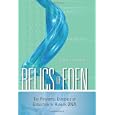
Relics of Eden

If you like my series, What Separates Humans from the Animals?, then you will like reading Relics of Eden: The Powerful Evidence of Evolution in Human DNA by Daniel J. Fairbanks. Fairbanks is a geneticist and was a professor in the department of plant and wildlife sciences at BYU for 20 years, where he also served as dean of undergraduate education, and is now at UVU.

Relics of Eden fills an explanatory gap that has existed for too long. Fairbanks explains his approach:

With the ongoing controversy over intelligent design, people often ask me to recommend a book on the molecular evidence of human evolution. Unfortunately, most popular human evolution books either fail to include DNA evidence, or, if they do, they cover only a few highlights. Instead, they tend to focus on archaeological, geological, anatomical, physiological, and theoretical evidence with little or no discussion of the literally millions of molecular fossils in DNA. These requests, and my dismay at repeated claims of meager and flawed evidence supporting human evolution, led me to draft the book you are now reading. [p. 7-8]

The intent of this book is to present just a fraction, but a very compelling fraction, of the DNA-based evidence of evolution. I have chosen to focus on human evolution because some people are willing to accept the idea that other species have evolved but draw the line with humans, usually for religious reasons. [p. 14]

These are some of the same reasons I started my series mentioned above. In fact, at times it almost felt like I had written the book because Fairbanks seemed to have stolen my own thoughts, if not my specific examples.

Most of the chapters deal with DNA evidence. Later there is a brief history of the creationist movement, some analysis of Intelligent Design, and some history of the development of molecular genetics. It is easy reading and has plenty of helpful diagrams. If you comprehend the information he lays out, you will begin to see how silly denials of human evolution are--especially those that claim a lack of scientific evidence.

I have one parochial complaint: When it comes to virology, Fairbanks is a little confused. Contrary to what is stated in the book, there are only a few infectious human retroviruses and influenza is not among them. Retroviruses represent just one of a number of families of RNA viruses, and retroviruses are unique in their ability to integrate into DNA. Although it is an RNA virus, influenza is not a retrovirus. (It's an orthomyxovirus, for those who care.)

My complaint aside, I enthusiastically recommend the book. I don't know of another one like it.


Continue reading...

Wednesday, March 18, 2009

Terryl Givens on Joseph Smith and Scientific Naturalism

Terryl Givens has been a rising star in Mormon studies for about ten years. He is a professor of literature and religion at the University of Richmond, and he got a lot of face time on the PBS program, "The Mormons".

Givens gave the keynote address at the recent "Parallels and Convergences: Mormon Thought and Engineering Vision" conference. His talk, "No Small and Cramped Eternities" is available online.


The talk itself is a little stuffy, but the Q&A is very interesting, IMO (starts ~min 34).

Among other things, Givens argued that Joseph Smith's departure from some traditional beliefs about Deity, particularly in the King Follett discourse, gives us a basis for building bridges with atheists and others dissatisfied with traditional religion, many of whom find religion distasteful for reasons that would be shared by Joseph and other early leaders. (I've seen a somewhat similar sentiment before. If I could just remember where?)

In an increasingly secularist society, the presuppositions--increasingly--of the educated masses are going to be scientific naturalism, and what I'm saying is that King Follett is a theology that grows out of scientific naturalism.
Although I like it, that's kind of a shocking statement that probably deserves more attention--maybe in a future post. Yet in spite of such radical possibilities, in many ways the Church is a lot like its other Christian neighbors. Givens says that this is because we define ourselves in relation to the dominant culture, which is traditional Christianity. In other words, traditional Christians are our largest group of potential converts, as well as the holders of power (political, social, etc.). In terms of strategy, it's probably not in the Church's best interest to emphasize this other side of Mormonism, but Givens thinks that we have the capacity to build bridges to other minority audiences.

I'll end with another statement I liked:
Joseph Smith, clearly, clearly, treasured the opportunity to think out loud. And on numerous occasions he expressed irritation with the fact that people always expected his pronouncements to carry the stamp of divine approval and authority. And I think he was trying to model for us a mode of intellectual inquiry, where as long as we don't make claims that are out of proportion to the certainty or authority that we have...
(Givens was speaking extemporaneously, so that last sentence kind of trailed off.)

(Hat-tip to Mormon Transhumanitists.)


Continue reading...

Thursday, March 12, 2009

On Being Certain: God in Your Brain

Continuing the discussion of On Being Certain, by Robert Burton...

If it is possible to have knowledge without a feeling of knowing or certainty, is the converse--certainty without knowledge--possible? Burton argues that it is. As evidence, he points to people who have had spiritual/mystical experiences as a result of seizures or that have been induced by chemical or electrical stimulation. Such people often report feeling a profound clarity of thought, purity, oneness with the universe, feeling the presence of Jesus or Mohammad, and emotions of joy, love, and so forth. However, these experiences apparently often occur without reference to specific beliefs or ideas. In other words, there is feeling but not information.

Neuroscientists have begun to map which parts of the brain are responsible for these sensations, and at least some (many? most? all?) near-death experiences can be explained along these lines. (As an aside, Burton lists a number of religious/mystics who may have had epilepsy, including Joseph Smith. I think that's the kind of thing that gets repeated because it sounds nice, not because there's any actual evidence behind it. More on this from FAIR.)

The study of the brain and spiritual/mystical experiences is sometimes called 'neurotheology'. In this context Burton wrote something of particular interest to me:

The underlying point is both profound and self-evident: Even if the origination of the sense of God were extracorporeal--from a distant black hole, a past life, a dead relative, the rings around Uranus, or God in his or her heaven--the final pathway for the message's perception must reside within the brain. [p. 25]
I reached the same conclusion several years ago, and I find it tantalizing as a place where spiritual meets physical. If any of the thoughts or feelings associated with genuine spiritual experiences are a function of brain activity (which I don't think can be denied), then there must be a point where atoms start moving and neurons fire due to interaction with the spiritual (assuming it exists, which I do). If such is the case, then at that point the spiritual becomes accessible to science--in principle. Practice is another issue.


Continue reading...

Monday, March 09, 2009

On Being Certain: An Overview

On Being Certain: Believing You Are Right Even When You're Not, by Robert Burton, is an exploration of where certainty and related feelings--feelings of knowing--come from and what they mean.

"Despite how certainty feels, it is neither a conscious choice nor even a thought process. Certainty and similar states of "knowing what we know" arise out of involuntary brain mechanisms that, like love or anger, function independently of reason." [p. xi]

"The message at the heart of this book is that the feelings of knowing, correctness, conviction, and certainty aren't deliberate conclusions and conscious choices. They are mental sensations that happen to us." [p. 218]

Burton is a neurologist and in early chapters he uses his background to illustrate what happens when certainty is missing, or pathologically present. One fascinating example is a syndrome where, as a result of brain damage, people believe that body parts are missing, or even that they are dead. Demonstration that their heart is beating is not sufficient to overcome the feeling that they are dead. To them it simply shows that one's heart can beat after death.

Burton argues that we should split thoughts into two components: the information of the thought, and the brain's unconscious assessment of the thought which comes in the form of a feeling. Viewed in this way, the feeling does not, in itself, constitute evidence of correctness or incorrectness. This makes sense; we've all had the experience of being quite certain about something only to be confronted with incontrovertible evidence that we were wrong.

An example in the book comes from a study where, within a day following the space shuttle Challenger explosion, a psychologist asked his class to write down details about where they were when they heard about it, and so forth. Two and a half years later the students were interviewed again. Twenty-five percent of the subsequent accounts differed significantly from the original written account, with only 10 percent getting all of the details correct. Many students were convinced that their memories were correct, even when confronted with their own written account. Not only are our memories surprisingly unreliable, the feeling that they are absolutely correct, even when they are wrong, can be hard to overcome.

I didn't get the sense that Burton is particularly religious, but he is sympathetic toward religious people. He argues that our unconscious is the real foundation of our thinking and motivations, only a small part of which bubbles up into consciousness. Given the complexity of our motivations and desires, he thinks that asking people to give up religion for pure rationality is (i) unrealistic because it ignores how our brains work, and (ii) impossible because pure rationality is itself an illusion that is based on unconscious desires and motivations. (As an aside, in The God Delusion Richard Dawkins dismissed Pascal's wager in part by dismissing the notion that you can will yourself to believe something. I wondered why the opposite does not apply--that you can't will yourself to not believe something.)
If science is to carry on a meaningful dialogue with religion, it must work to establish a level playing field where both sides honestly address what we can and cannot know about ourselves and the world around us. We need to back away from perpetuating the all-knowing rational mind myth that makes real discussion impossible. At the same time, we need to acknowledge that the evidence for a visceral need for a sense of faith, purpose, and meaning is as powerful as the evidence for evolution. And we must factor in that irrational beliefs can have real adaptive benefits--from the placebo effect to a sense of hope. Insistence upon objectivity and reason should be seen within a larger picture of our biological needs and constraints. [p. 196]
Feelings and science both have their place, but we should be careful not to confuse them. Ideally, they should work together.
The issue I have with gut feeling, intuition, and split-second decisions is in believing that we can know when to trust them without having any criteria for determining this trust. A feeling that a decision is right is not the same as providing evidence that it is right. [p. 154]

The book is an easy read; it's neither philosophical nor overly scientific. Many of the examples Burton draws upon in his discussion come from real life and common experience.

For more on the book, see an interview with the author at Scientific American.


Still to come... the Mormon connection.


Continue reading...

Parallels and Convergences

The workshop Parallels and Convergences: Mormon Thought and Engineering Vision at Claremont Graduate University has come and gone. There is a summary report at BCC.


Continue reading...

Friday, February 27, 2009

George Will Responds; Sinks Deeper

George Will published a defensive editorial today regarding his much criticized recent column on global warming. His defense, as contained in the column and as articulated by his editor, basically boils down to this: "I can interpret the data how I want to. That, and reporters at the New York Times are jerks."

In addition, in an attempt to shore up his credibility Will further injures it by writing:

On Feb. 18 the U.S. National Snow and Ice Data Center reported that from early January until the middle of this month, a defective performance by satellite monitors that measure sea ice caused an underestimation of the extent of Arctic sea ice by 193,000 square miles, which is approximately the size of California. The Times ("All the news that's fit to print"), which as of this writing had not printed that story, should unleash Revkin and his unnamed experts.
Problem: The sensor problem did not affect the ACRC's data--the data on which Will staked his claim. Further, taken on its own it still doesn't help him because Arctic sea ice is still down. Also, Revkin has taken up Will's challenge.

My last post, George Will, Global Warming, and Accuracy, gave an overview of the controversy that remains relevant in light of Will's latest column.

For Carl Zimmer's summary and analysis of the latest, see Unchecked Ice: A Saga in Five Chapters, and Ice, Ice Baby: When Fact-Checking Is Not Fact-Checking.

Andrew Revkin of the New York Times responds in Experts: Big Flaw in Will’s Ice Assertions.

Slate also has a helpful article that explains the significance of Arctic ice, and why it is considered separately from that of the Antarctic: Is the Cryosphere Crying Wolf?


Continue reading...

Wednesday, February 25, 2009

George Will, Global Warming, and Accuracy

Last week conservative columnist George Will published an op-ed in the Washington Post, Dark Green Doomsayers, wherein he reiterated his skepticism of global warming and portrayed it as hype, and it's been bouncing around the blogesphere ever since. I'll summarize what I've found and provide some links. The column makes several claims; the ones that have gotten the most attention are:

Claim: Back in the 1970s everyone was worried about global cooling, which turned out to be wrong.

Response: See my last post, The Global Cooling Myth. The article cited there actually refers to previous columns by Will as perpetuating the myth.

Claim: "...according to the U.N. World Meteorological Organization, there has been no recorded global warming for more than a decade, or one-third of the span since the global cooling scare."

Response: Nobody seems to know where this claim came from. Here is what I think is going on (as explained by New Scientist). Depending on whose data you believe, 1998 had either the warmest or second warmest global mean temperature since observations began. Let's compare the data from NOAA and U.K. Met Office Hadley Centre.


In the U.K.'s data, 1998 sticks out as the warmest year. Will and others who claim that warming has stopped are privileging the data for a single year above the overall trend. The U.K. data also show a slight cooling in the last few years. I'll leave it to the reader to decide what that means for the overall picture.

Claim: "As global levels of sea ice declined last year, many experts said this was evidence of man-made global warming. Since September, however, the increase in sea ice has been the fastest change, either up or down, since 1979, when satellite record-keeping began. According to the University of Illinois' Arctic Climate Research Center, global sea ice levels now equal those of 1979."

Response: Most of the focus has been on this one. Let's take it in basic chronological order.

Jan 1, 2009: DailyTech website published a story, Sea Ice Ends Year at Same Level as 1979, which reported that a quick recovery in late 2008 resulted in global sea ice levels equivalent to those at the end of 1979. At first glance, this would seem to negate worries about reduced ice.

Jan (?): In response to the story, the Arctic Climate Research Center (ACRC)--which was a source for the DailyTech story--published a clarification (pdf) noting that the article compared global sea ice area. However, Northern Hemisphere ice area has decreased, an observation in line with climate models, and Southern Hemisphere ice area has increased, which is in line with some climate models. Further, although the area may be the same, the new ice is thinner and so ice volume is down.

Feb 15: George Will's column was published, which apparently relied on the DailyTech article for its claim that current global sea ice is the same as 1979.

Feb 15+: In response to Will's column, ACRC put the following statement on their website:

In an opinion piece by George Will published on February 15, 2009 in the Washington Post, George Will states “According to the University of Illinois’ Arctic Climate Research Center, global sea ice levels now equal those of 1979.”

We do not know where George Will is getting his information, but our data shows that on February 15, 1979, global sea ice area was 16.79 million sq. km and on February 15, 2009, global sea ice area was 15.45 million sq. km. Therefore, global sea ice levels are 1.34 million sq. km less in February 2009 than in February 1979. This decrease in sea ice area is roughly equal to the area of Texas, California, and Oklahoma combined.

It is disturbing that the Washington Post would publish such information without first checking the facts.
The Post stands by the column and has refused to print a correction. In support of their position, they cited the first statement from the ACRC, which stated "Observed global sea ice area, defined here as a sum of N. Hemisphere and S. Hemisphere sea ice areas, is near or slightly lower than those observed in late 1979." However, critics point out that they ignored the broader context of the statement, which pointed out the shift observed in the individual hemispheres and lower ice volume.

Defenders of Will point out that at the end/beginning of 2008-2009, he was correct: global sea ice area was equivalent to the end of 1979. So the ACRC's refutation of Will based on February data is irrelevant to his point. I've altered a figure published by the ACRC to show this.


However, the broader context gives a slightly different picture (click to enlarge):


There seems to be a trend in recent years of reduction in global sea ice area. This can be seen both by the trend in the red line, as well as by comparing the upper blue line with the superimposed gray line.

As Carl Zimmer points out, comparing individual days thirty years apart does not give an accurate sense of the overall picture, which is illustrated by looking at the individual hemispheres.


Rather than criticize Will, Carl Zimmer is using this as a lesson on poor fact-checking by a major newspaper. (Part 1, 2, 3, and 4.)

Chris Mooney is using it as a lesson on the generally poor shape of newspapers (The George Will Scandal).

I should also point out that a New York Times story, In Climate Debate, Exaggeration Is a Pitfall, mentions Will's column, as well as the fact that Al Gore has removed a slide that he recently added to his presentation after the source for the slide complained that it was being misused.


Update: (2/27/2009) George Will has responded in a new editorial. See George Will Responds; Sinks Deeper.


Continue reading...

  © Blogger templates The Professional Template by Ourblogtemplates.com 2008

Back to TOP